A problem-based learning collaboration project
Project Statement: How can House Doctor increase customer interaction while increasing the profit revenue by 10%?
Team:
5 branding and marketing students in collaboration with House Doctor ApS
Timeframe:
4 months
Focus Area:
design (app and web), research, in-person observations
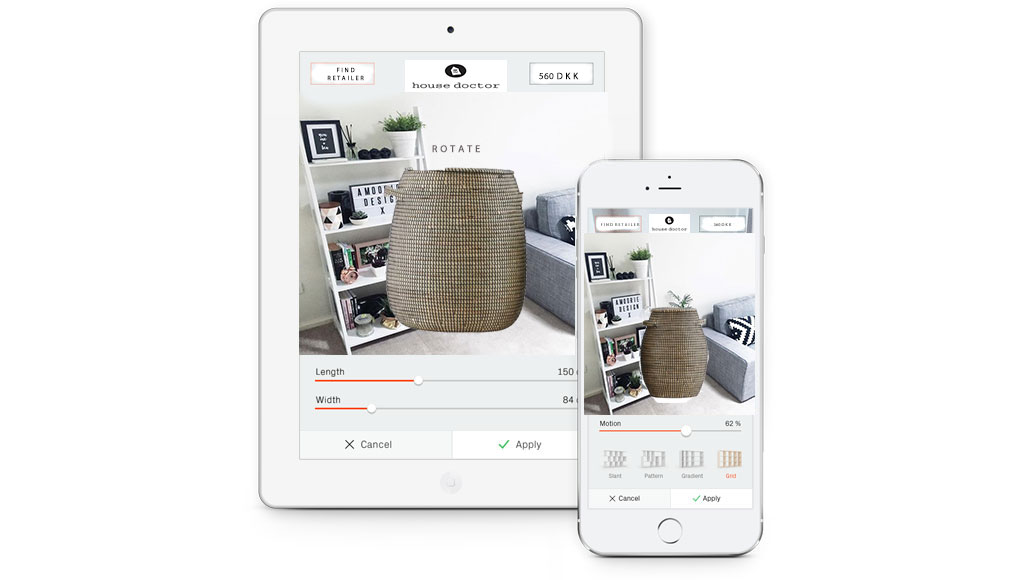
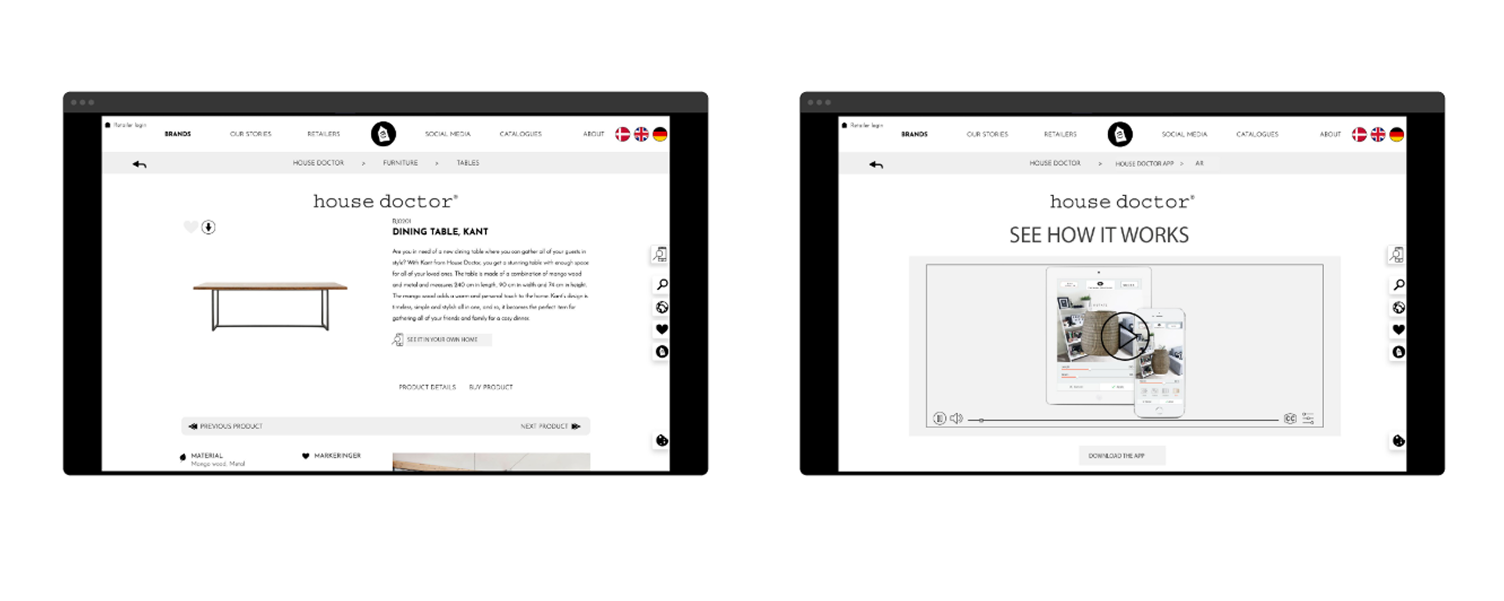
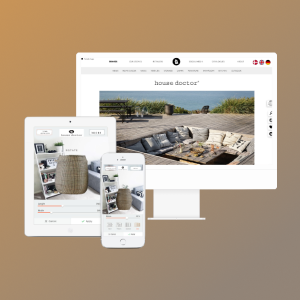
House Doctor ApS is a Scandinavian interior design brand with 3 sub-brands: Meraki, MONOGRAPH, and Nicklas Vaché. For this problem-based learning project, we have chosen to focus on the parent brand, House Doctor. Our proposal to ncrease online market presences is by incorporating web-based augmented reality directly on House Doctor's website. With their products being in an online showroom, users can select "see more" on a product allowing a 3D render of the product that can be seen in "reality" through phone/tablet's camera. In addition, it will link to the nearest retailer store for House doctor.
Understanding the brand that we are working with was the first step into figuring out what improvements to the branding strategy of House Doctor is there.
Showroom Observation
As a team, we went to visit House Doctor's public showroom where we were able to get some insights from the marketing staff on their setup of their showroom and products. As well as being able to ask questions in regards to their brand identity. The showroom is broken down into 4 sections representing different products within House Doctor's brand organization.
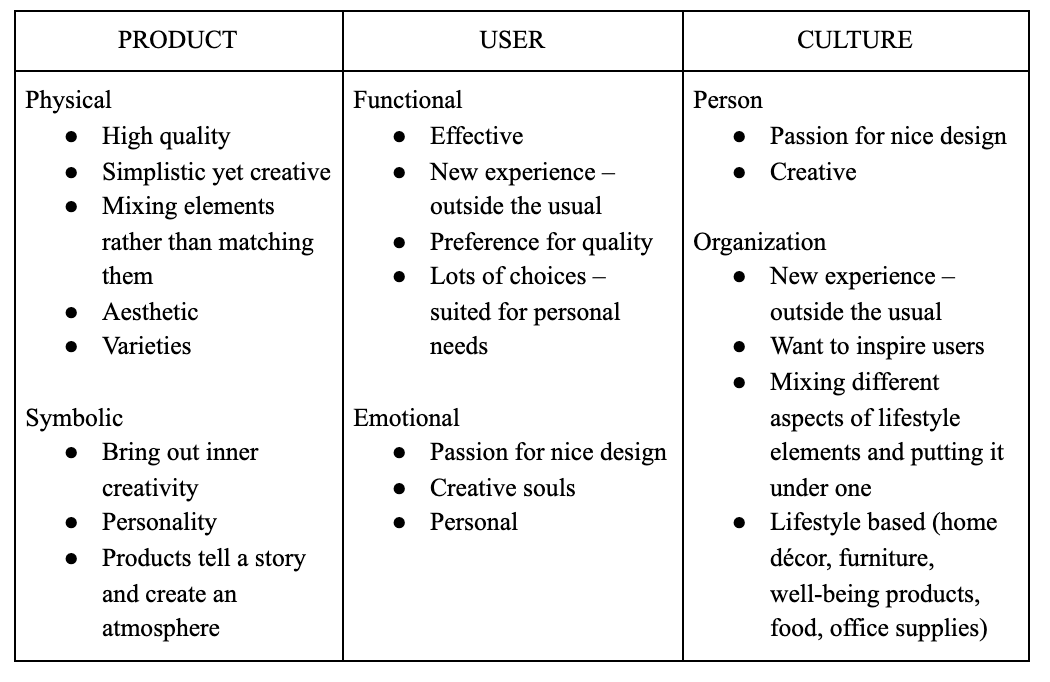
Brand DNA
Conducting a brand DNA analysis was a great first step for the team to be able to understand House Doctor's brand identity. This serves as a foundation for our team for strategic decision-making, ensuring that all brand-related activities align with the established DNA. It also aids in developing a cohesive and compelling narrative that resonates with the target group, fostering brand loyalty and recognition.
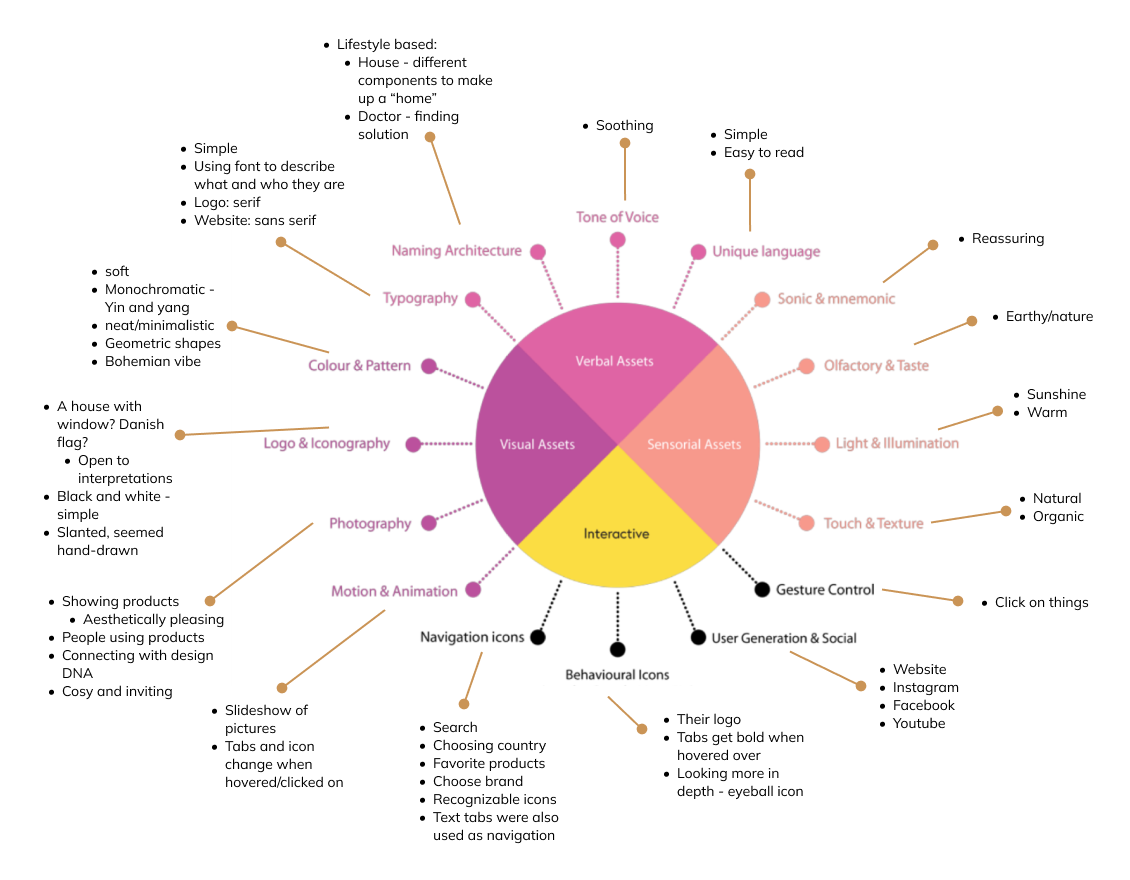
360˚ Brand Identity Wheel
Utilizing a 360° Brand Identity Wheel was beneficial for understanding House Doctor's brand identity. This tool offers a framework that encompasses all facets of a brand (verbal, sensorial, interactive, and visual). By listing out various aspects, this model presents the all the areas that contributes to a House Doctor's brand perception, and justifying a cohesive and recognizable brand image.
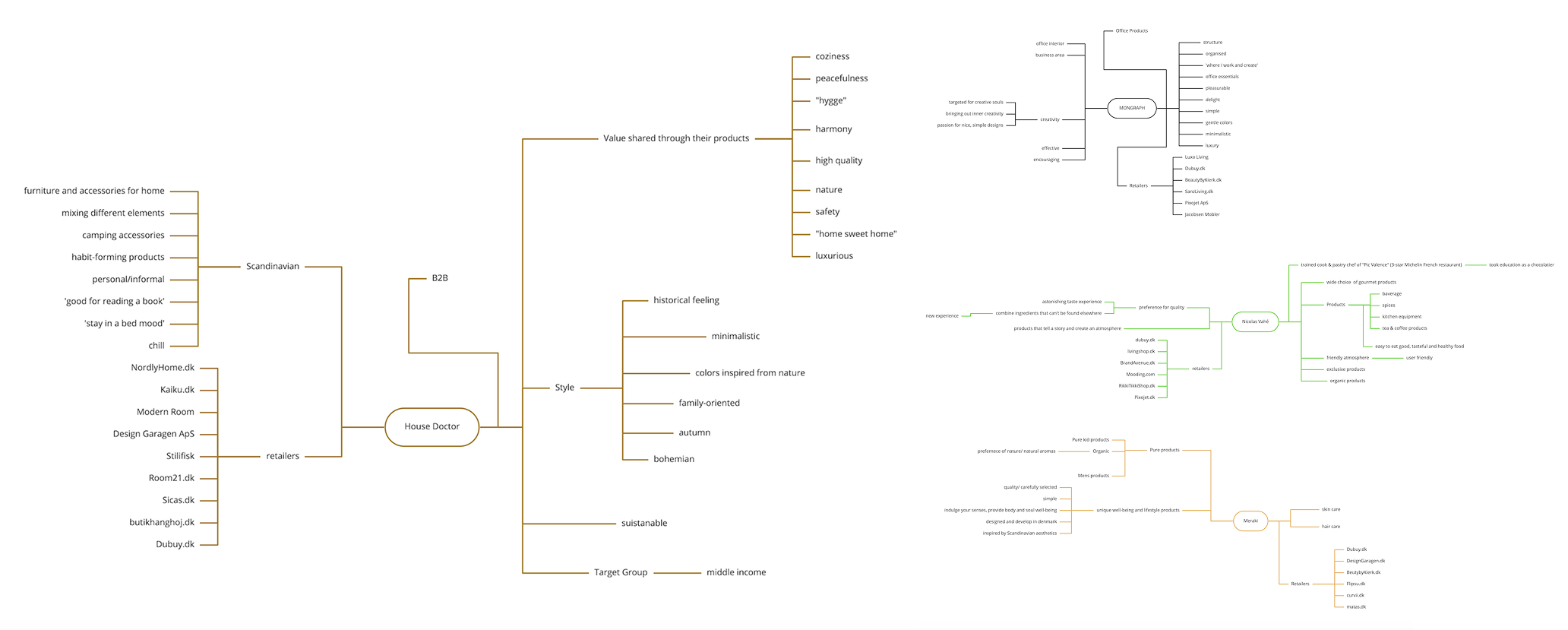
Mindmap for House Doctor's brands
As a team we had broken down each of the House Doctor brands into mindmaps to have a better visualization and understanding. Each brand had their own brand identity, and it was through this method we decided for this problem-based learning project to only focus on the parent brand, House Doctor.
Looking at the strategic planning and management of House Doctor was key for us to dive deeper into the branding strategy. However, we found it best to organize the information rather visually utilizing various of models and methods, as we are a team of visual learners this helped us retain the information better.
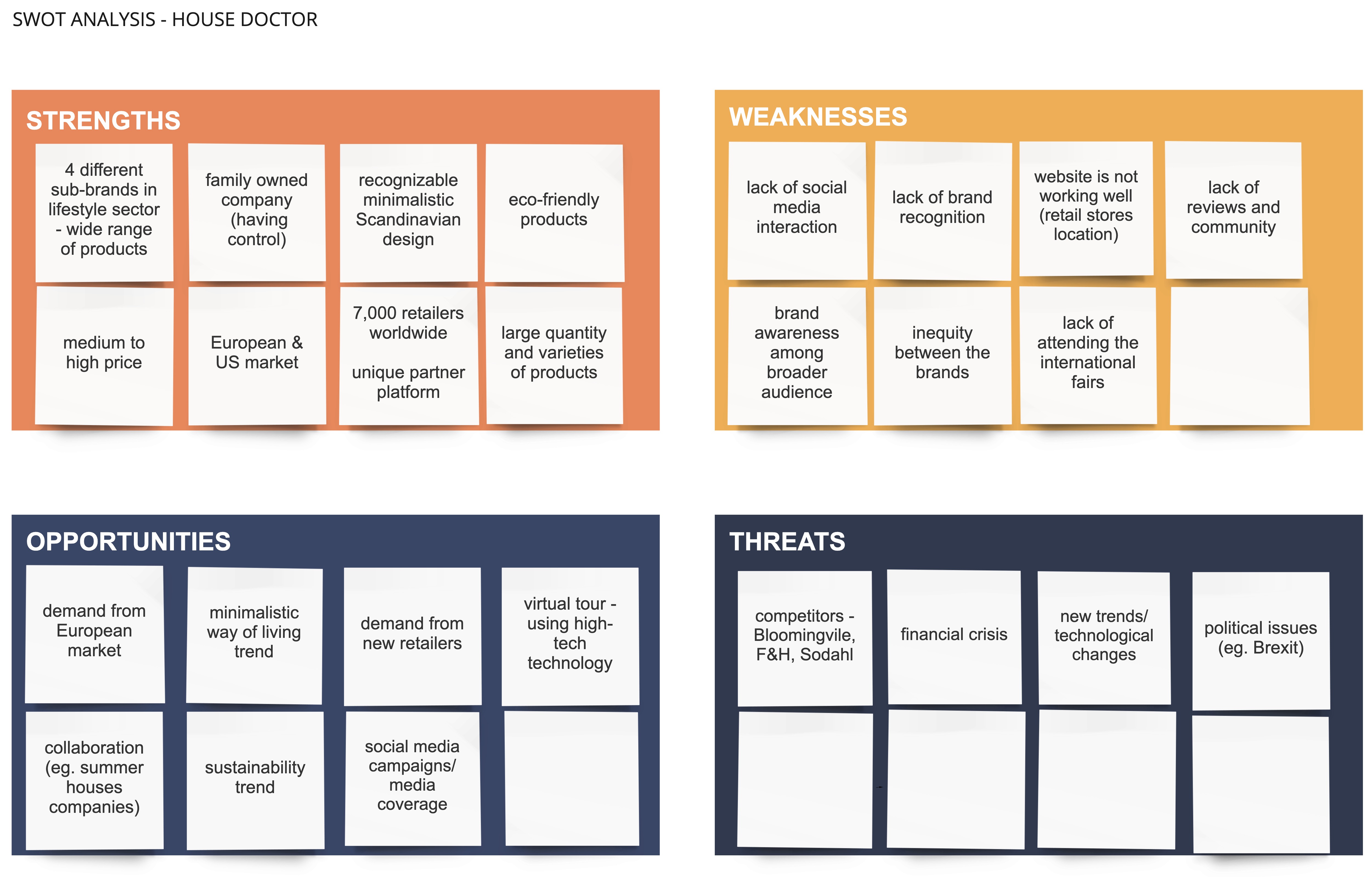
SWOT Analysis
SWOT analysis proved to be a valuable tool for several reasons. Firstly, it facilitated a structured examination of internal strengths and weaknesses, as well as external opportunities and threats. This holistic assessment allowed for a comprehensive understanding of the current state of a House Doctor. This served as a practical and accessible framework for decision-making, guiding the formulation of strategies that contributed to more informed and effective decision-making.
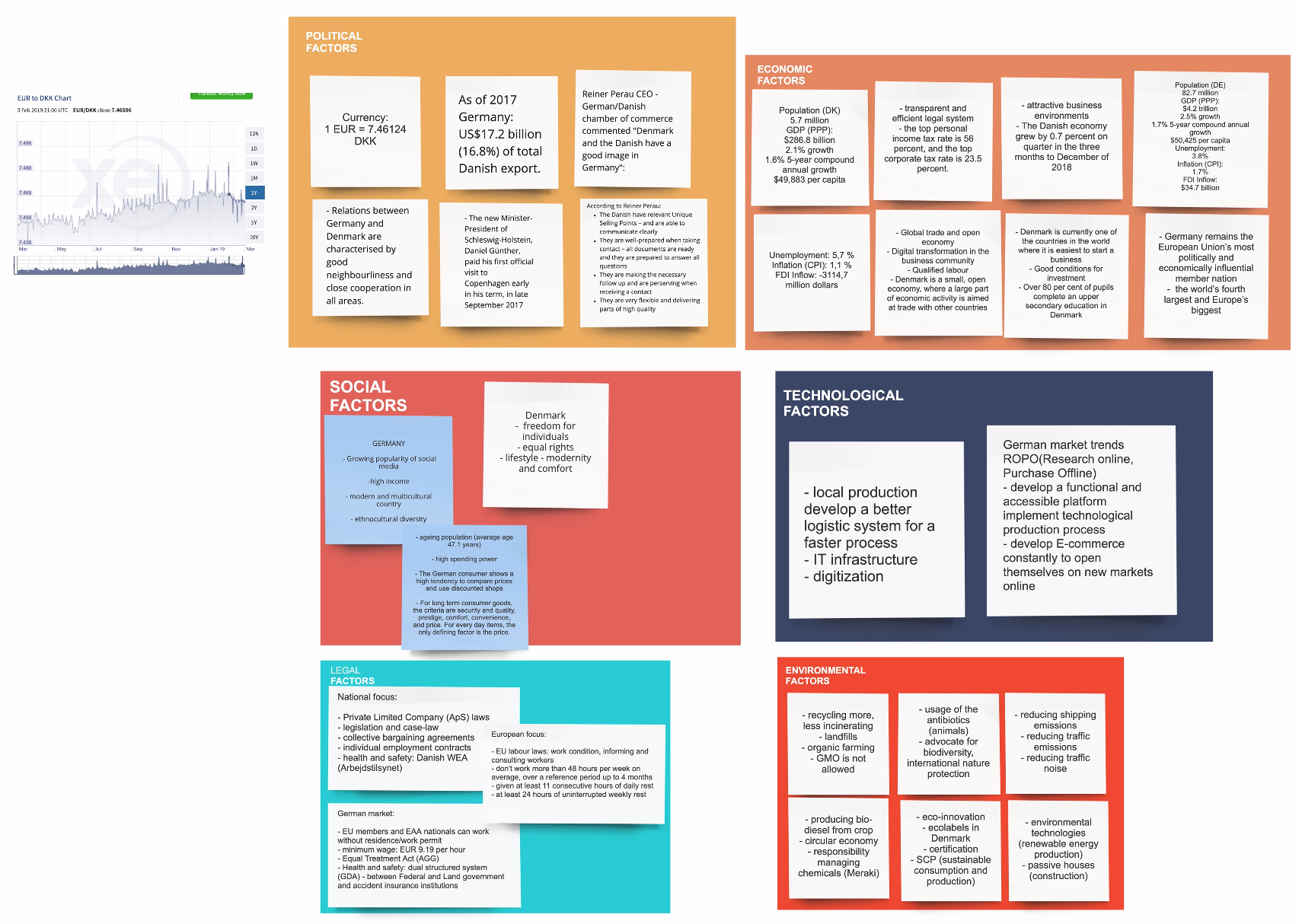
PESTLE Analysis
Using PESTLE analysis provided a comprehensive framework for evaluating and understanding the external factors influencing House Doctor. The analysis of the various factors allowed for a holistic view of the external environment, identifying potential opportunities and threats. Additionally, this model helped in anticipating changes in the business landscape. By considering these factors, it enhanced the overall risk management strategy, ensuring a more robust and informed approach to our potential solution to propose for House Doctor.
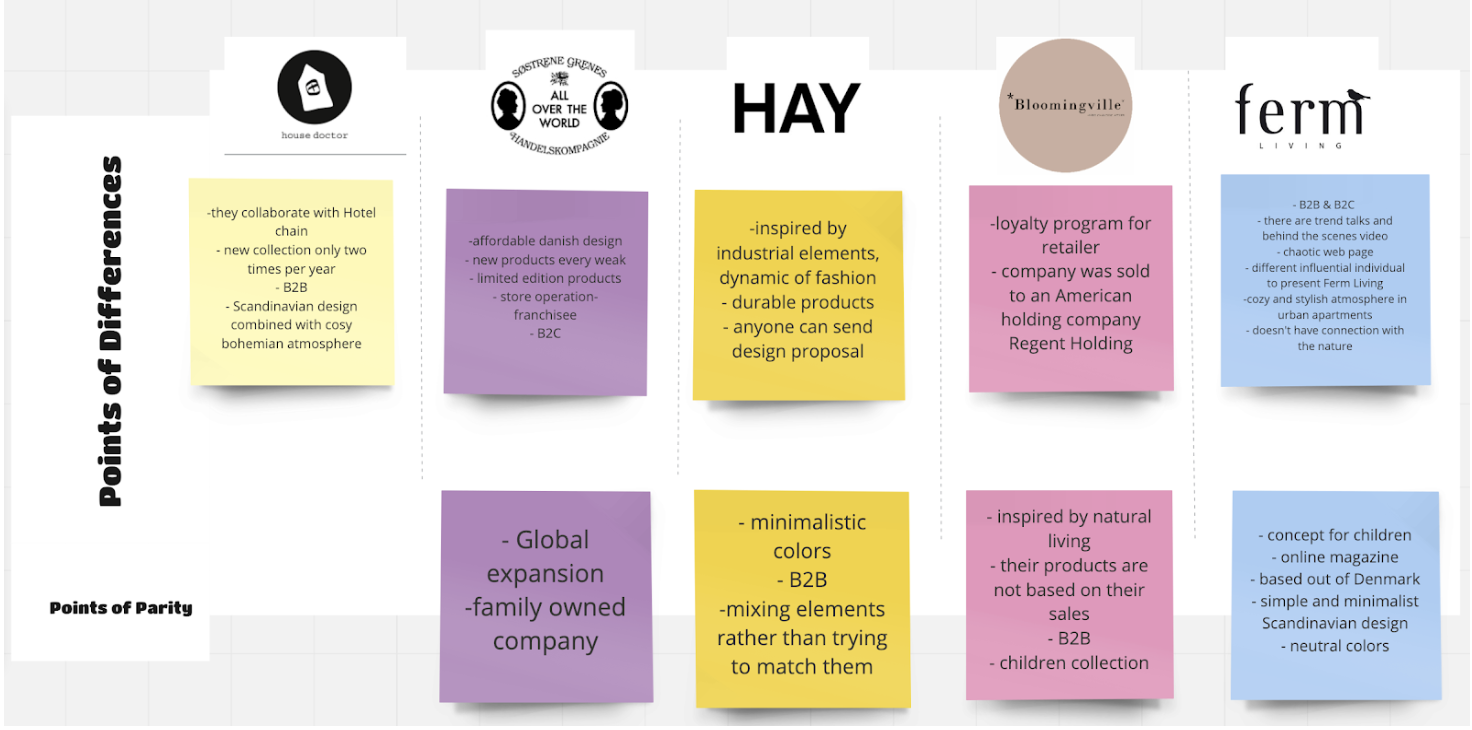
Competitor Analysis
Conducting a Points of Difference and Points of Parity competitor analysis has been a huge benefit in understanding House Doctor in the business perspective. Identifying Points of Parity helps to ensure that House Doctors is aligned with industry standards. While recognizing the Points of Difference highlights the unique features and qualities that set House Doctor apart from competitors. This differentiation is crucial for understanding the competitive advantage. By understanding both aspects, we are able to fine-tune the marketing strategies better and make informed decisions about where to compete and how to position House Doctor effectively in the market.
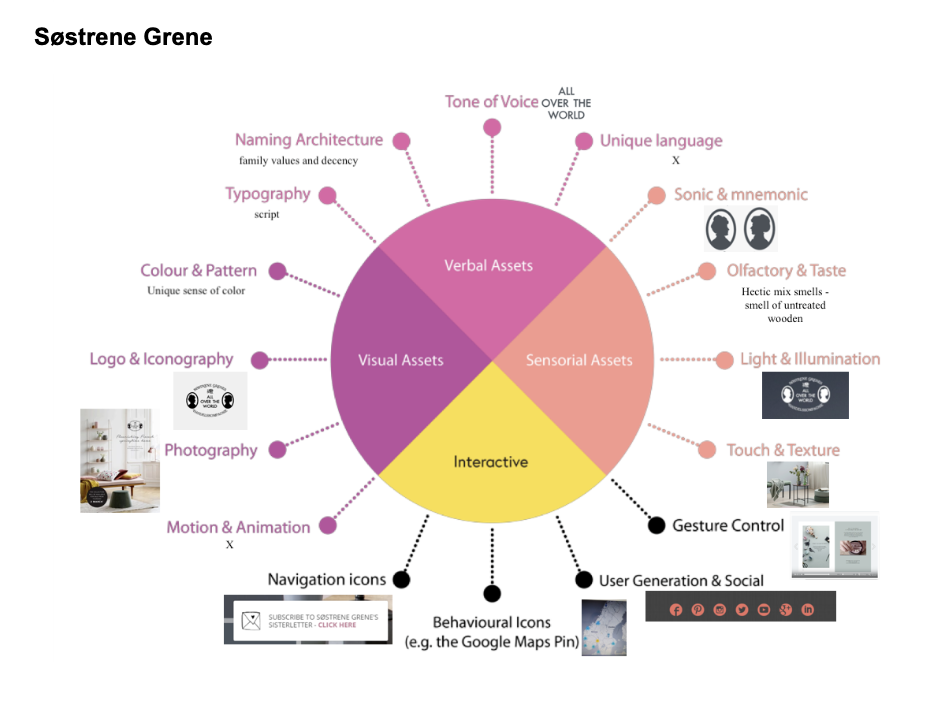
Competitior 360 Brand Identity Wheel
Brand: Søstrene Grene
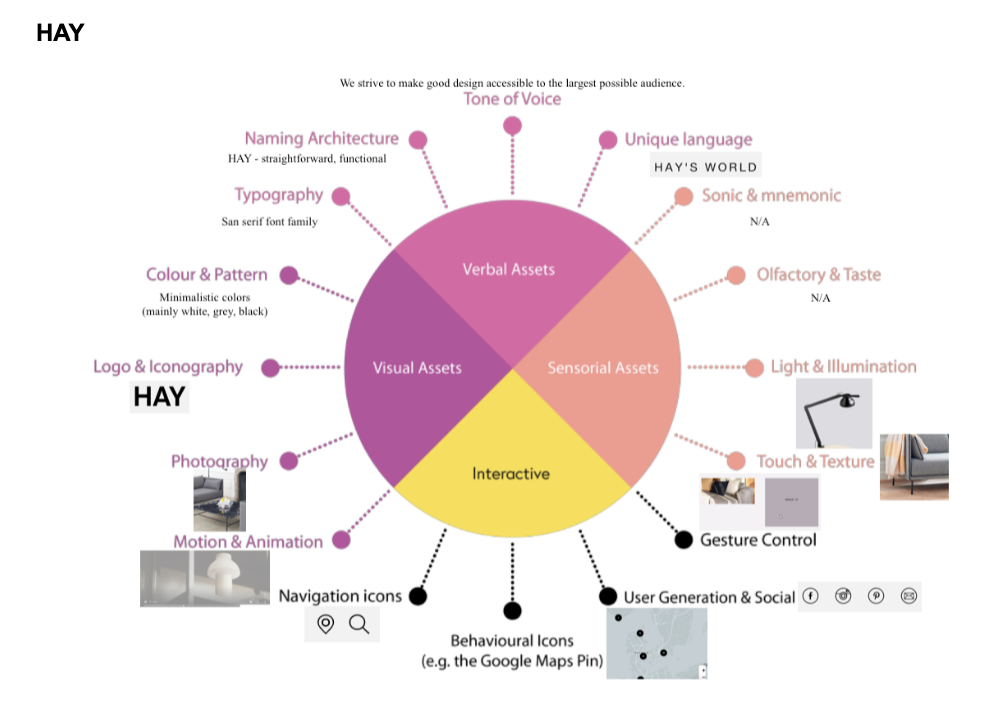
Competitior 360 Brand Identity Wheel
Brand: Hay
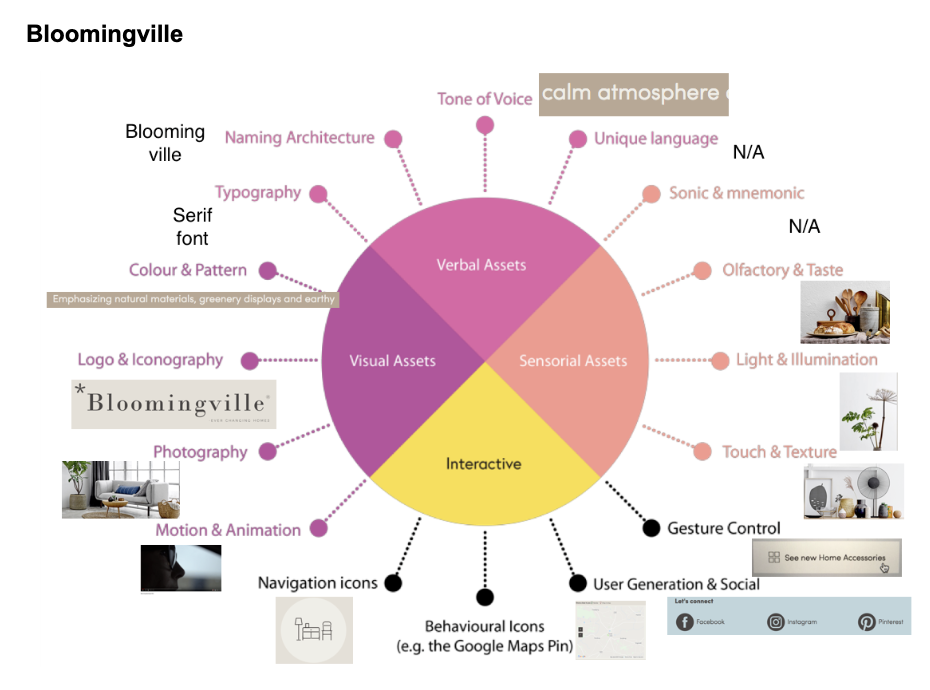
Competitior 360 Brand Identity Wheel
Brand: Bloomingville
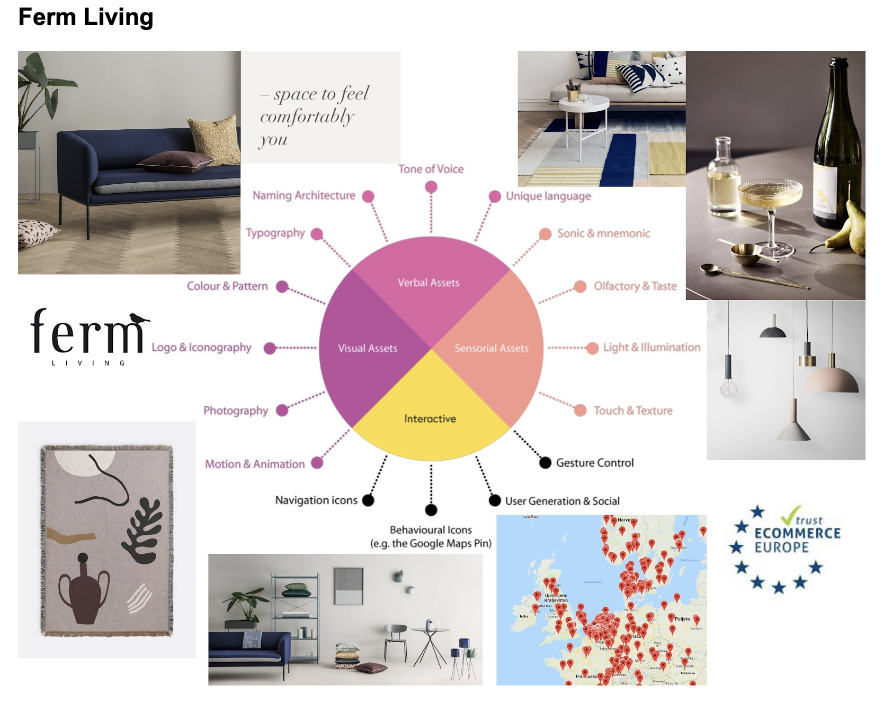
Competitior 360 Brand Identity Wheel
Brand: Ferm Living
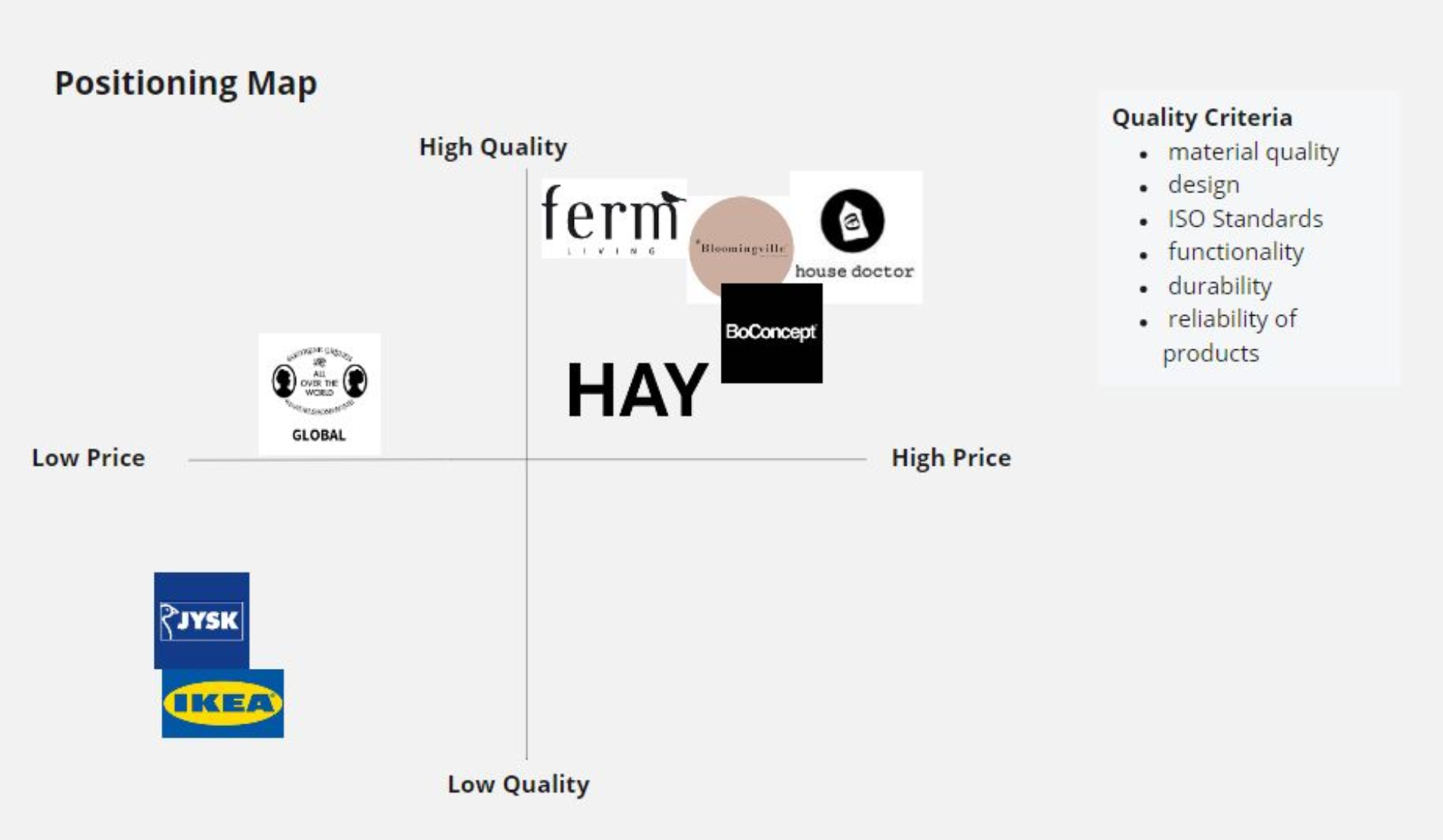
Positioning Map
Creating a positioning map for House Doctor was a way to be able to take a look at where they stand in the market compare to their competitors. This was justified based on price and quality. We had identified quality based on the criteria of material quality, design, ISO standards, functionality, durability, and reliability of products.
Through market research we had discovered that the German market has a big online shopping presence, while being a steadily growing target group for House Doctor for a few years.
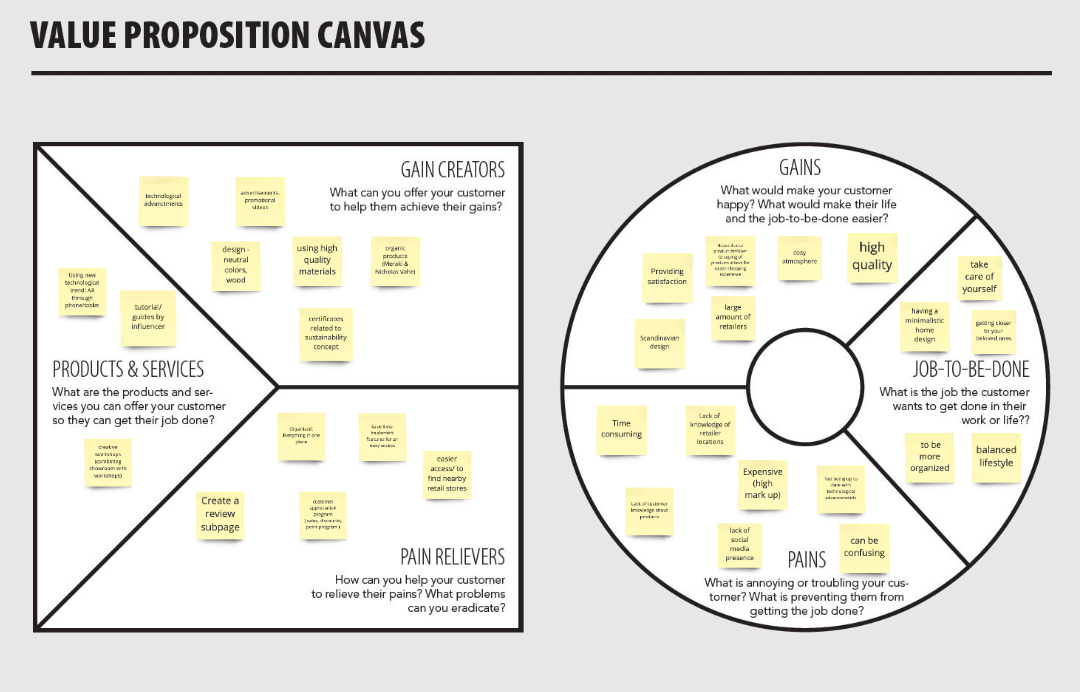
Value Proposition Canvas
A value proposition canvas is done to access the pains and gains from the target group. This also helps to form what ideas of potential solutions can aid in being gain creators and pain relievers. This method of visualizing has helped in being able to focus on what key values that House Doctor's new branding strategy should strive towards as we ideate further on our potential solutions.
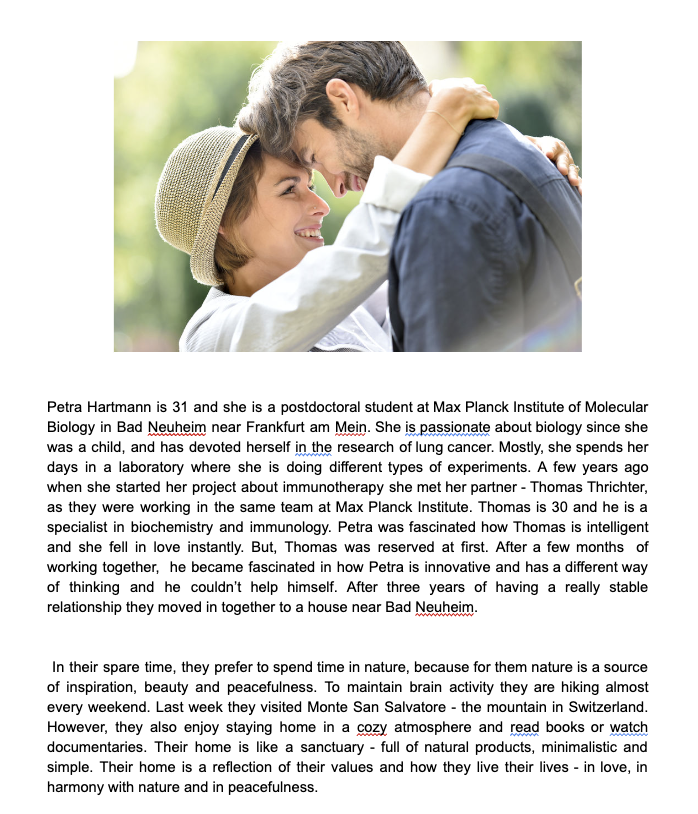
Persona
We created a persona in order to develop a deeper understanding of our users' goals, needs, experiences, and behaviors. This process emphasized the importance of humanizing data, reinforcing the dynamic nature of understanding users and the continual need to adapt personas as products or services evolve.
After a long brainstorm session, as a group we had generated a lot of different concepts but utilmately preferred the direction of moving towards an e-commerce option for House Doctor.
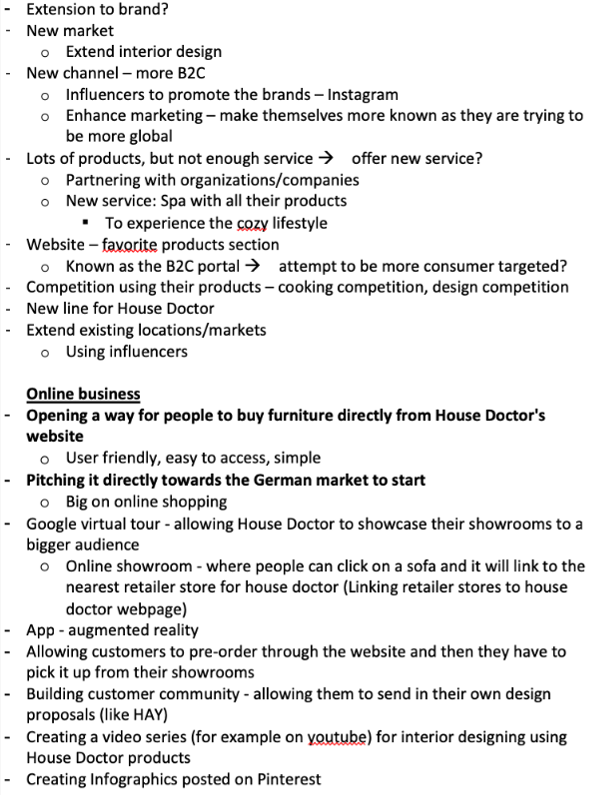
Ideation list
As our group was discussing potential ideas, I was being the note taker and writing down every little comment that could potentially be turned into a concept for this project.
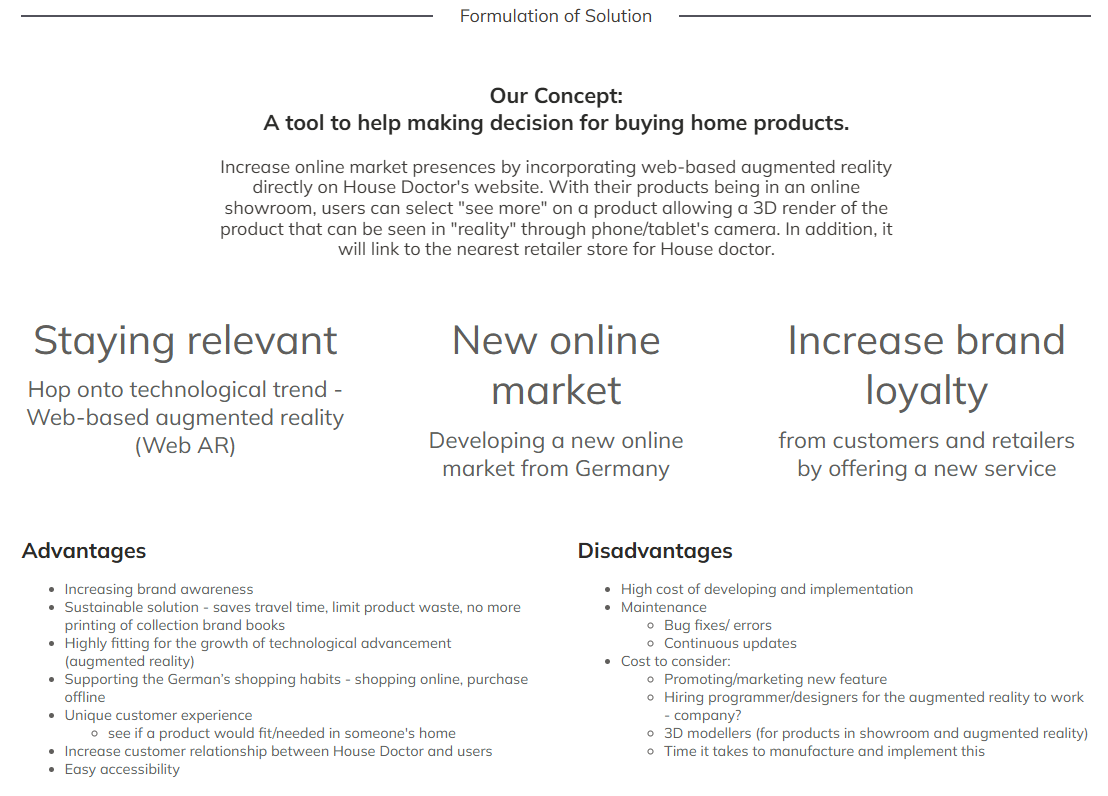
Our Concept
In the end, we decided that our concept of creating a tool to help making decisions for buying House Doctor products would be the most realistic concept to present to the company.
Since House Doctor already has an app for retailers exclusively, through improving their House Doctor app by opening up to potential customers and changing the app into B2C, this will be able to increase House Doctors profit revenue by 10% by the year of 2021. Additionally, to create an unique customer experience compare to other competitors, House Doctor should implement the new technological trend of virtual reality, specifically using augmented reality to offer a brand new service to consumers. This new service would allow House Doctor to open up an online market, and since Germany is the target market who have a heavy use of online shoppers, it would enhance customer relationship for House Doctor. The idea of using AR would allow the user to see a 3D render of the product that can be seen in "reality" through phone or tablet camera and it will link to the nearest retailer store. This newer shopping experience would therefore evoke a fun and positive atmosphere for the consumers.
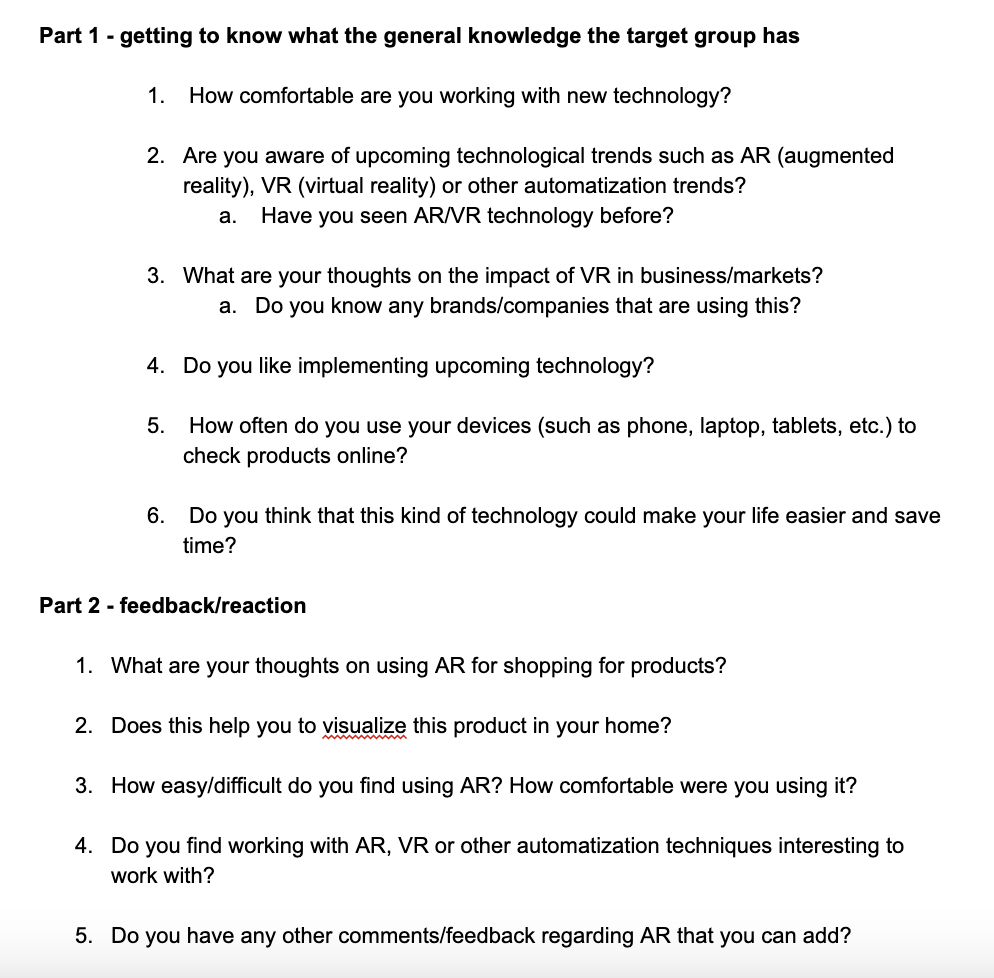
Interview
Conducting an interview helped to grasp the general knowledge of AR and how useful potential consumers would feel about having this tool. In general, the participants are acknowledged of the new technology and have a positive attitude towards it. Majority of them have heard about the concept, but didn’t use it privately. They are really keen on implementing this technology in their everyday life and recon that it definitely might make it easier to visualise how the product will look in their home. Because they are familiar with the process of buying online, the implementation of AR in the buying process will be a big asset to the company. We are in the time of fast moving and development and people are open to technology which can make their life more easier and helps in fast decision making. With House Doctor already using modern technological advancements for their inner office system (bitcloud), it shows that they are willing to take part in the technological trend. So using AR could be a natural next step for them.
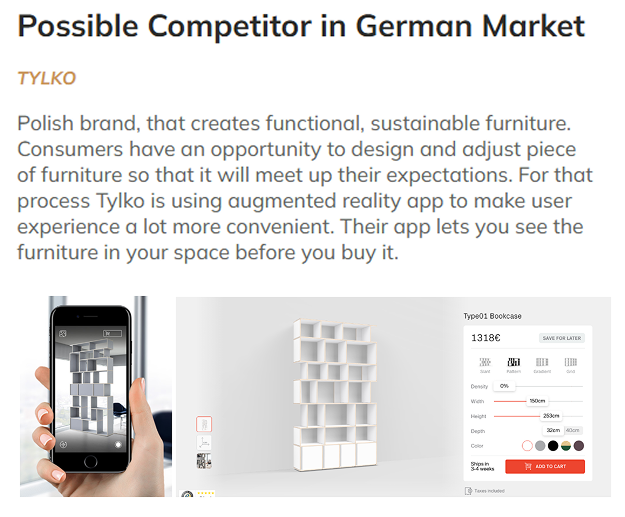
Possible Competitior
Knowing that this concept is not brand new, we took the time to look at potential competitors, and found that this is one of the biggest competitior for House Doctor within the German market with the same approach.
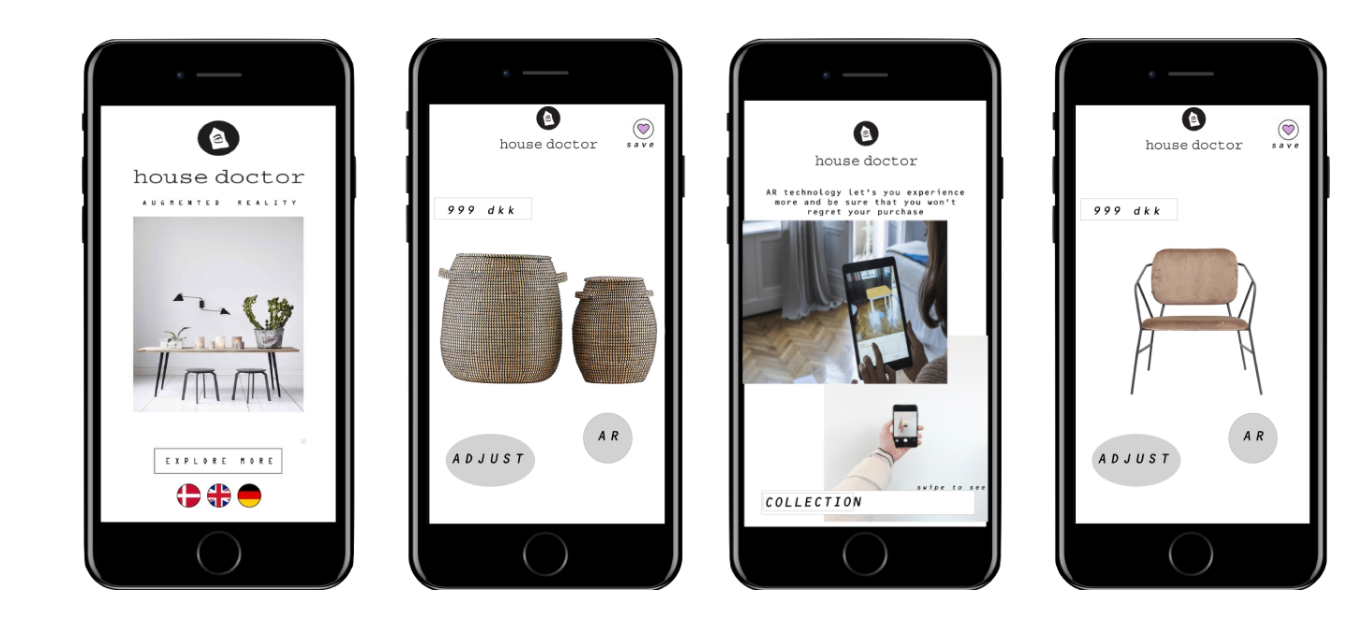
In developing a mockup for the app interface, my focus was on seamlessly translating House Doctor's website into an interactive mobile application. Utilizing Devar's WebAR design tools, I incorporated a transformative feature, allowing users to view 3D models of furniture pieces with realistic proportions. The app's innovation extended to providing adjustability features for furniture placement and pattern customization, based on House Doctor's product offerings. This not only enhanced the user experience by offering a more immersive visualization but also empowered users to make personalized choices. The design process prioritized user-friendly navigation and collaboration with developers to seamlessly integrate 3D rendering and adjustment functionalities, aiming to create a captivating and tailored experience for users exploring House Doctor's furniture catalog through the app.
App Iteration
Here are some initial iteration placements and ideas of the app which was later refined and made to fit to work with the functions of Denvar's WebAR.
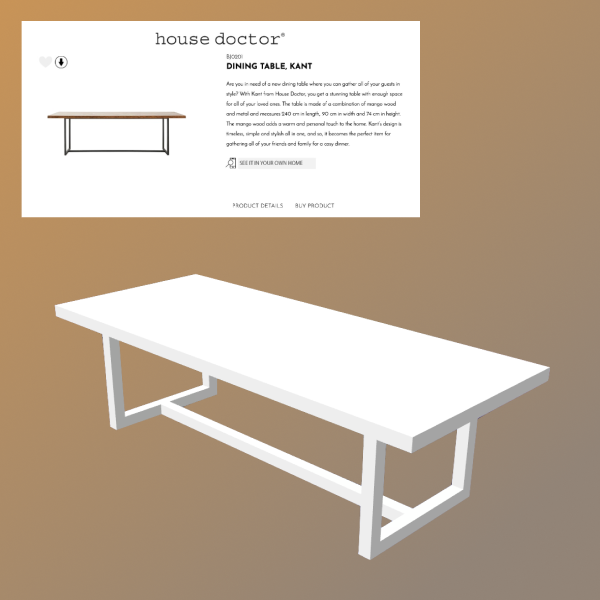
3D modeling for WebAR
Utilizing Devar's WebAR design tools, I was able to experiment with creating House Doctor's products into 3D models. This was a learning opportunity for me to enhance and refine my 3D modeling skills using Computer-Aided Design (CAD) techniques.
Throughout the project, I navigated the challenges and rewards of creating a 3D model, emphasizing an iterative process and troubleshooting. Analyzing a brand's identity involved comprehensive research and critical thinking to understand its values and market positioning. This analysis laid the groundwork for proposing solutions that aligned with the brand's identity and appealed to its target audience. Crafting a proposal for a real company required synthesizing insights from the 3D modeling and brand analysis phases, resulting in a well-communicated plan with a detailed scope, timeline, and budget. The experience underscored the importance of a holistic approach, combining technical skills, creativity, and effective communication for successful real-world projects.